

It revolutionized eye-surgery when it first made a grand entry on the medical stage. This was well over two decades again. Since then, LASIK (laser in situ Keratomileusis), a laser correction technique that reshapes the cornea to correct a host of eye problems from nearsightedness to astigmatism to farsightedness, has gone from strength to strength. Even so, there are many questions and some doubts about the surgery, its efficiency, which I, Mr. Occulus, your friendly neighbourhood wise eye, am only too happy to answer and correct.
Here goes..
How do I know whether I am a suitable candidate for LASIK?
The results of a thorough pre-operative evaluation will answer this one. For best results, we clearly need a suitable candidate. You need to be over 18 years old (and ideally under 40) with a healthy cornea, no eye diseases, stable eyeglass prescription for a minimum of 1 year and best corrected vision of 20/40, amongst
other things.
How do I choose an eye surgeon ?
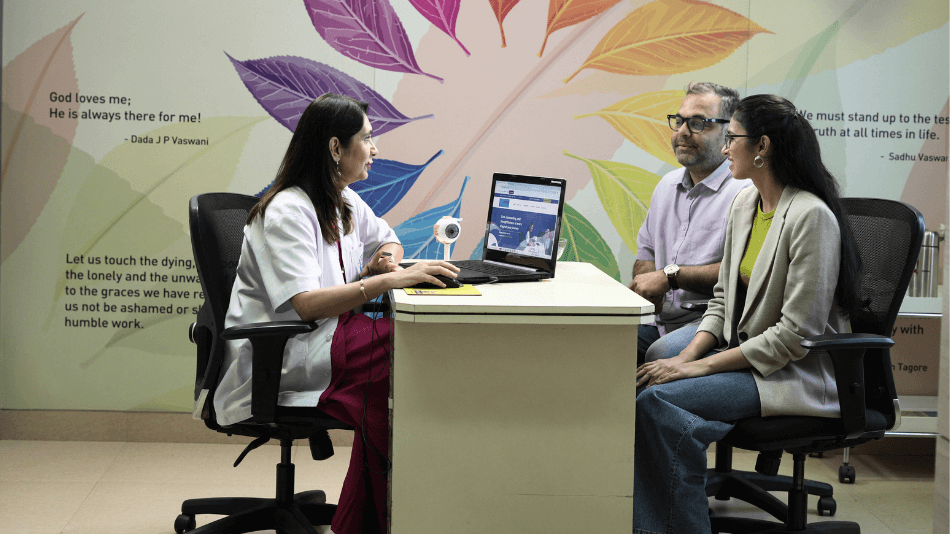
A good place to start is to talk with an eye professional you know and trust. Research names online, but also ask friends or family who have had successful LASIK. While the ophthalmic surgeon has a team to help him/her to help with your initial evaluation and measurements, it is your surgeon who decides whether LASIK is an appropriate choice for you. Please feel free to clarify your doubts. It is important to have an open communication with your doctor.
What’s the oldest age at which I can have laser vision correction?
There’s no set maximum age for laser vision correction. However, the overall health of the eyes definitely matter. We would also need to determine that your vision is not being hampered due to an eye disease. If you are wearing bifocals or reading glasses now, you will still need them after LASIK.
A treatment option with Refractive Surgery is known as monovision. In this, the patient’s dominant eye is corrected for distance vision with their non-dominant eye being slightly near-sighted. Although not a replacement for reading glasses, it preserves a degree of near vision clarity.
I hope LASIK is safe?
Yes, it is an FDA approved procedure. However, the candidates have to be carefully chosen with a thorough pre-evaluation for optimal results.
I’ve heard that I need to stop using contact lenses before the LASIK procedure. Is this correct?
Since contact lenses can alter the shape of the cornea, it is necessary to remove them before your pre-operative exam. Soft lenses need to be removed one week before, while rigid/permeable lenses need to be removed 4 weeks before the exam. Follow your pre-operative exam, if you are a soft lens wearer, you may wear them again up to 24 hours before surgery. However, other lenses are best avoided completely.
Does LASIK hurt?
No, not at all. The numbing drops will keep you comfortable though you might feel eye pressure and a gritty sensation in your eye. Post-surgery, you will be prescribed a pain killer and rest.
How much time does LASIK take?
The actual procedure takes less than 10 minutes per eye. Depending upon the prescription and the amount of correction needed, the laser itself only takes 20-50 seconds to correct your vision.
How accurate is LASIK?
Based on clinical data from the FDA, Lasik is very accurate. However, in rare cases, some patients may need retreatment in one eye to achieve their best uncorrected vision. Please note, there will always be a degree of variability in how each person’s eye will heal.
What if I blink during the procedure?
This is a common concern. Please do not worry. Steps will be taken to ensure that blinking is not an issue. To explain briefly: your eye will be held open with a holder supporting your lid so that you can’t blink. The holder is removed immediately after the procedure. During the treatment itself, the surgeon will help keep your head in position. You will be asked to watch an object such as a blinking target light. Simultaneously, the laser’s computer will be monitoring the position of your eye with its tracking system. This eye tracker adjusts the laser treatment to note/follow the small movements made by the eye.
How long after surgery will I be able to see ?
The time could vary from a day to a week. Most patients would resume normal activities within a day or two of surgery, but it could take a month or two for your vision to completely stabilize.
So, there you have it a nutshell, dear reader. I have hopefully busted the myths and spread the light- the very same light for which darkness can never be a substitute !!
When will I be able to drive ?
You need a driver to take you back home on the day of the surgery and possibly a day or two for the post-operative appointment. While most patients should be able to drive within a day, the safest bet is to ask your doctor about your specific case.
Will LASIK cause night vision problems?
Starbursts, glares and halos are a temporary condition for some patients post-surgery. Please relax!
How often will I have to follow up with my doctor post operatively?
While it differs from case to case, typically follow ups would be after one day, one week, one month, three months and possibly even after six months.
How long will effects of LASIK last?
In most cases, the treatment effect is long term, especially if your eyeglass number was stable before treatment.
However, vision naturally changes with age. This is due to an age related condition called presbyopia. The lens in your eye gets harder and less flexible, and it stops focusing light correctly on the retina. Due to this, there is a chance that you might need to wear reading glasses after you are 40.