
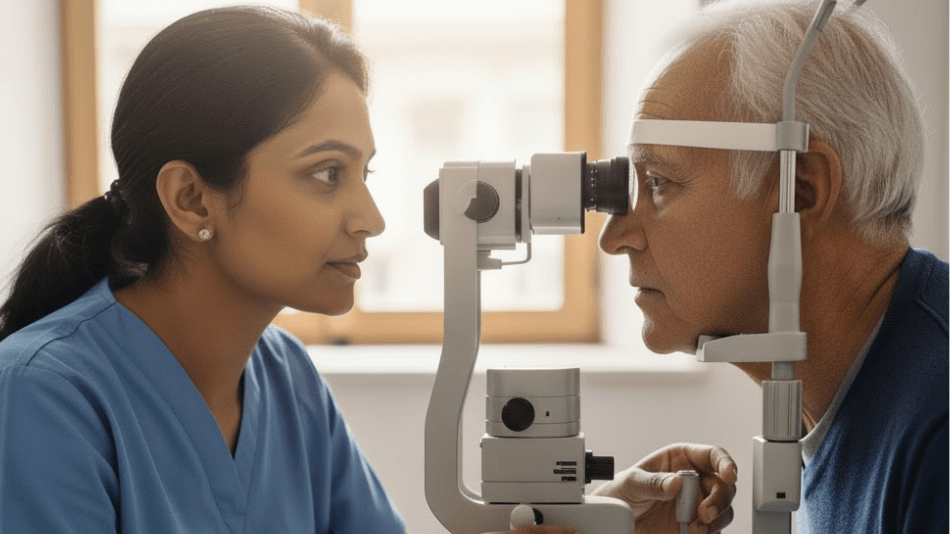
If you’re caring for an ageing parent, here’s what you need to know:
- Age increases glaucoma risk, especially after 60.
- Diabetes and high blood pressure both raise the chances further.
- Vision loss begins at the edges, not the centre, so it often goes unnoticed in daily life.
- Many older adults adapt without realising something’s wrong.
You keep noticing it. Your dad says the lighting’s too dim. Your mom skips reading the fine print on the medicine label. They used to handle the stairs or street crossings confidently, but now you see a small pause, a slight hesitation.
They say, “Oh, it’s nothing.” But something feels off.
As a caregiver or adult child, you’re often the first to notice early clues, long before they admit something has changed.

Mr. Oculus says: One of the most overlooked reasons behind this change is glaucoma.
Why eye care matters more after 60
Once your parents reach the 60-year mark, the risk for eye diseases increases, not just because of age but also because of how slowly these conditions progress without obvious symptoms.
Glaucoma is especially tricky. It affects peripheral vision, doesn’t cause pain, and may not show up until significant vision is lost. But what makes it harder to catch in ageing parents is that they adapt quietly, until it’s too late.
Have diabetes in the family? The risk of glaucoma climbs even higher. Diabetes can quietly damage the eye’s delicate blood vessels, making it harder for fluid to drain, and increasing eye pressure. In aging parents, this can make glaucoma even harder to catch early.
As a caregiver, your role is super important!
Here’s how you can help your loved ones detect and treat their glaucoma, without making it overwhelming:
Watch for subtle changes
- Trouble noticing steps or curbs
- Avoiding crowded or low-light places
- Bumping into objects on one side
- Frequently switching glasses or complaining about glare
Ask open-ended questions
Instead of “Can you see clearly?”
Try: “Do you feel like you miss things on the side when walking?”
This helps uncover hidden visual field issues.
Encourage a check-up
Say: “Let’s just get everything checked. It might be nothing, but it’s worth confirming.”
Position it as a routine health check rather than a reaction to decline.
What should you expect from a glaucoma diagnosis journey?
To diagnose glaucoma, the doctor will perform a comprehensive eye exam that goes beyond a regular vision check. This includes measuring eye pressure (IOP), examining the optic nerve, testing peripheral vision, and using imaging scans like OCT to detect early nerve damage. Additional tests like gonioscopy or corneal thickness measurement may be done depending on the case.
Want to know exactly what each test involves and what to expect? Read our blog here.
If the doctor suspects glaucoma, here’s what comes next.
- Medication routines, usually daily drops, which can be hard for ageing parents to remember
- Follow-ups every 3–6 months, even if vision is stable
- Emotional reactions—some parents may worry about losing independence, even if the diagnosis is early
Mr. Oculus offers a new reminder:
“Glaucoma isn’t a sprint. It’s a long-distance condition. Your consistency matters more than any one test result.”
High Blood Pressure and Glaucoma: What You Should Know
High blood pressure (hypertension) can increase the risk of developing glaucoma by affecting blood flow to the optic nerve. But it’s not just high pressure—large fluctuations or low nighttime blood pressure can also worsen glaucoma over time by reducing blood supply to the eye.
That’s why it’s important for people with glaucoma to manage their blood pressure carefully, ideally with guidance from both an ophthalmologist and a physician. Some medications may affect both conditions, so your doctor can help adjust treatment safely.
Diabetes and Glaucoma
Diabetes doesn’t only affect your blood sugar—it can quietly damage the tiny blood vessels in your eyes.
In advanced diabetic eye disease, abnormal blood vessels block the drainage of the eye and cause a rise in eye pressure leading to glaucoma
What you can do:
- Make sure their diabetes check-ups include dilated eye exams
- Mention any vision changes—however small—to their eye doctor
- Ensure glucose, HbA1c, and eye pressure are tracked regularly
- Be alert to changes in contrast sensitivity, glare, or side vision
Treatment: What Happens After a Glaucoma Diagnosis?
If your loved one is diagnosed with glaucoma, the goal is to preserve their existing vision by lowering eye pressure and protecting the optic nerve from further damage. While there’s no cure, there are effective treatments to manage it long-term.
Most people start with prescription eye drops, sometimes followed by laser treatment or minimally invasive surgery if needed. These treatments don’t reverse damage, but they help slow or stop its progression.
5 Care Tips for Managing Glaucoma in Ageing Parents
1. Help create a medication habit
Tie eye drops to daily routines, like brushing teeth or taking other medicines. Use alarms if needed.
2. Accompany them to early appointments
Having a second set of ears helps understand the treatment plan. It also helps them feel supported.
3. Talk about it early
Don’t wait for vision to worsen to start conversations about adapting lighting, avoiding stairs at night, or using handrails.
4. Respect their independence
Don’t overcorrect or hover. Offer help, but let them lead where possible—it builds confidence.
5. Track subtle changes
Keep a note if they seem to avoid driving, stop reading as much, or change routines. These shifts often precede obvious symptoms.
And if you’re feeling unsure…
You’re not alone. Many adult children and caregivers find themselves in this quiet transition, helping without overstepping, guiding without making someone feel dependent.
Eye care is a small but powerful piece of that puzzle. Sometimes, the most powerful thing you can do is stay involved, ask questions, and show up. That’s what truly supports ageing eyes at risk of glaucoma.
What you can do:
- Don’t wait for symptoms to appear. Encourage a full eye exam that includes pressure checks, optic nerve imaging, and field testing.
- If they have diabetes or high BP, remind the doctor to check for glaucoma, even without complaints.
- Watch for early clues: missing steps, needing more light, or bumping into things.
- If treatment is started, help make it routine. Consistency matters more than intensity.