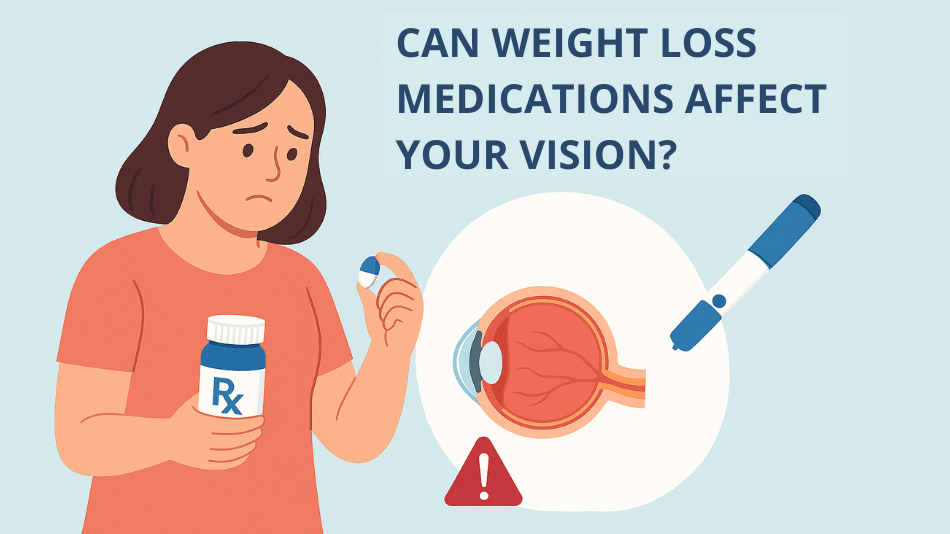
If you’re taking medications like Ozempic or Wegovy for weight loss or diabetes, you may have heard some concerning news that they are linked to a rare eye condition called NAION. As your eye care specialists, we want to give you the facts so you can make informed decisions about your health.
So, what exactly is this eye condition everyone’s talking about?
The condition is called NAION (Non-Arteritic Anterior Ischemic Optic Neuropathy). That’s a medical mouthful, but here’s what it means in simple terms: it happens when the blood supply to your optic nerve gets cut off, kind of like a stroke in your eye.
The main symptom is sudden vision loss in one eye—it’s painless, and people often notice it when they wake up in the morning. You might see a dark area in part of your vision, or everything might look dim or foggy in that eye which may be permanent and never go.
Now, keep one thing in mind: it is uncommon. We’re talking about a condition that affects about 2-10 people out of every 100,000 each year.
Who’s More Likely to Get NAION?
Certain health conditions make NAION more likely to happen:
- Diabetes – High blood sugar can damage small blood vessels over time.
- High blood pressure – This puts extra strain on the tiny vessels in your eyes.
- High cholesterol – Can cause blockages in small blood vessels.
- Sleep apnea – Reduces oxygen levels at night, which can affect blood flow to your eyes.
- Smoking – Damages blood vessels throughout your body, including in your eyes.
- Eye anatomy – Some people are born with small optic nerves that have less space, making them more vulnerable.
- Obesity – can raise the risk of NAION, because it often comes with problems like diabetes, high blood pressure, or sleep apnea.
If you suffer from multiple conditions, you should ensure that you undergo regular eye check ups.
What Does Research Show?
Recent studies found that people taking GLP-1 medications (like Ozempic and Wegovy) had a higher chance of developing NAION compared to people not taking these drugs.
The overall numbers are low, but the increase was statistically significant.
To put this in perspective: if you normally have a 1 in 10,000 chance of developing NAION, the research suggests it might be 4-7 in 10,000 with these medications.
If you already suffer from eye problems related to diabetes, like Diabetic Retinopathy, these medicines may worsen your condition.
Also, these medications may cause NAION in people who are already at risk by reducing blood flow to the optic nerve.
What Do Medical Organizations Say?
The American Academy of Ophthalmology does not advise stopping weight loss medications solely because of risk of contracting NAION.
However, it’s important for you to;
· Discuss risks and benefits with your prescribing doctor and take decisions based on your condition
· Be aware of NAION symptoms. Seek immediate care if vision changes occur.
Warning Signs to Watch For
If you are on Ozempic, Wegovy, or similar medications, contact an eye doctor right away if you notice:
- Sudden vision loss in one eye
- A dark spot, curtain, or shadow in part of your vision
- Vision that suddenly looks dim, foggy, or blurred
- Symptoms that are usually painless
Stop these medicines immediately if you notice blurry vision.
At K K Eye Institute, we believe in #NoCompromise on awareness and care. Protecting your vision means staying informed about every possible risk.