
One size doesn’t fit all and the same holds true for LASIK Surgery. A detailed pre-LASIK evaluation will decide whether you and LASIK are a match or not?

Would you use a stick to swat a fly? Or a sword to remove a thorn stuck in your flesh? Absolutely not, right? Anyone with a little common sense will use a rolled-up paper for the former and a needle for the latter. Why complicate the simple unnecessarily, you might say! Well, the same logic applies to LASIK surgery: tempting as it may sound, to get rid of your glasses, it will yield the desired results only when it is the right fit to the problem.
In fact, this is exactly what the Ophthalmic surgeon explained to 20-year-old Nikhil whilst refusing his request for LASIK.
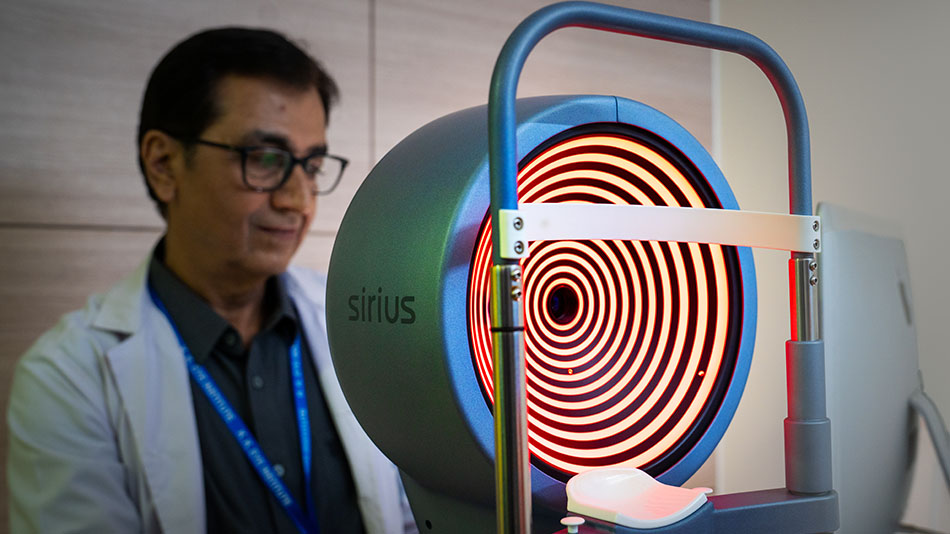
The bright youngster has always dreamt of an illustrious career in the army. Considering the physical rigours of training, that would include running, horse-riding, trekking and more, he was keen to rid himself of his glasses before applying. As always, a careful pre-LASIK evaluation had been carried out for Nikhil. This included an eye pressure check, corneal topography, eye length, muscle balance, dry eyes status, health of cornea (Specular microscopy), Retina and Optic Nerve checking.
Everything was fine except for the Corneal topography. It was weak to begin with and suggestive of Keratoconus. In simple language, it means that there were signs of a disease in the cornea which could manifest itself fully at a later stage.
When LASIK is carried out, some tissue is removed from the cornea. Hence, if the cornea is already weak, or thin to begin with, doctors may advise against LASIK surgery to prevent complications in the future.
In Nikhil’s case, if he did LASIK, there was a risk that the cornea could develop a condition called post-LASIK ectasia, with several visual complications. Sure, modern surgeries care for thin corneas better than before, but, in case of a pre-existing problem, it’s best to avoid any surgery whatsoever on the cornea.
So, no LASIK for Nikhil. The good news, however, was that he could go in for Implantable Contact Lenses (ICL) that would help him do away with glasses and free him up to live his life just the way he wanted to! And while all’s well that ends well for Nikhil, I hope I am able to make my case for choosing LASIK wisely and with discretion.
Are you and your eyes in good health?
The success of LASIK depends on the degree of your refractive error and other factors. People with mild nearsightedness tend to have the most success with Refractive Surgery. On the other hand, those who suffer from a high degree of nearsightedness or farsightedness along with astigmatism have less-predictable results.
There are certain eye conditions that might render you unsuitable for LASIK;
Eye conditions that get in the way
- Eye injuries or eyelid disorders
- Thin corneas: LASIK basically changes the curvature of the cornea and makes it thinner. So, if you already have thin corneas to start with, this surgery is not an option.
- Abnormal corneal maps: If corneal topography that maps out the cornea for the doctor shows an underlying sub-clinical corneal abnormality like Keratoconus that could become a full-blown disease post Lasik surgery, the doctor will not take such a risk.
- Squint or gross muscle abnormality. Those patients who stand a chance of developing a squint as per the pre-operative checkup are best advised to defer the surgery. However, in some cases, the doctor may decide to go ahead anyway with the intention of performing a squint correction after LASIK.
- Dry Eyes: For those already suffering from severe dry eyes that produce less quantity/quality of tears, LASIK is best avoided till the condition improves.
- Inflammation (such as keratitis or uveitis) and infections (such as herpes simplex) affecting the eye.
The wait and watch cases
- People who are less than 18 years of age. Till this age, your eye power may keep changing.
- Unstable glass power: LASIK should only be done when the power of your eye has been stable for at least a year or so. If eye power is not stable and increases in future, then even after a previous LASIK, eye power will increase. In such cases, we wait till the eye power is stable.
- Those who need contact lenses or glasses only some of the time and enjoy a good overall vision. The question then arises: is it worthwhile to undertake the surgery, only for incremental improvement?
- People with age-related eye changes. The ideal upper limit for LASIK is 40 years.
- Sportspeople who play a contact sport such as martial arts, kickboxing, wrestling, rugby or boxing that result in regular blows to the face.
- Temporary but significant life phases and medications including pregnancy, breastfeeding, steroid drugs may cause temporary fluctuations in your vision. Wait until your vision has stabilized before considering LASIK eye surgery.
Diseases that defer the decision
- Advanced Glaucoma: Glaucoma is a chronic, progressive eye disease caused by damage to the optic nerve, which leads to visual field loss. A major issue is eye pressure; a problem with the eye’s drainage system can cause fluid buildup and pressure. The surgical pressure of LASIK can raise the eye pressure that will worsen the glaucoma. So, whether it’s a known case of glaucoma or advanced visual defects that are detected Pre-LASIK, surgery is best avoided in the interest of glaucoma management.
- Diabetes and other autoimmune diseases: Both can interfere with proper healing after LASIK and push up the risk of corneal melting and infections. In such cases, surgery is best avoided.
What I am basically saying, dear readers, is that long-term safety and well-being should always be in sight before going in for LASIK. The pre-LASIK evaluation is a fairly good indicator of both subtle and severe risks. What’s more, it also helps us to pick different types of procedures like wave front guided LASIK, Contura LASIK, Femto LASIK, Smile LASIK and PRK.
In other words, don’t be sad if your doctor says no to LASIK. Other options like ICL Implantation and Refractive Lens Exchange are options that can restore your vision sans the risks.