
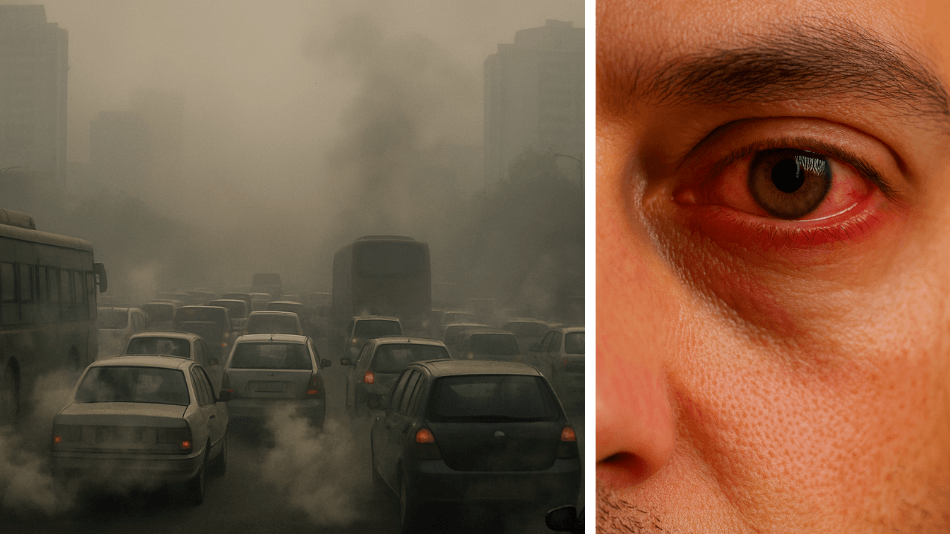
Over the past few winters, Pune — especially areas like Koregaon Park, Kalyani Nagar, Hadapsar, Nagar Road, Hinjawadi and Baner — have seen days where AQI crosses 200–300, entering the “Poor” or “Very Poor” category.
While people often worry about respiratory health when AQI rises, we would like to remind you that your eyes are also affected by pollution.
Are you aware that Delhi doctors recently reported a 60% spike in eye problems in November? Cases of redness, irritation and allergic conjunctivitis are all more common at such times.
What makes high AQI harmful for your eyes?
First let’s understand exactly what pollutants are causing high AQI.
Scientists at IITM Pune (Indian Institute of Tropical Meteorology) have observed that Pune’s air quality has steadily been deteriorating over the past decade. Primarily, the city sees seasonal rise in finer (PM2.5) and coarser (PM10) particulate matter during winter, while monsoon air remains relatively clean
So, the villains are the PM2.5 and PM10 dust particles. They come from;
- Vehicle emissions
- Construction dust
- Burning of waste
- Winter temperature inversion which traps pollutants close to the ground.
Your lungs have an internal filtration mechanism, which helps to protect you from these pollutants. However, your eyes are relatively far more vulnerable. They have just one delicate protective layer – the tear film.
The tear film is a thin layer of moisture that coats the surface of your eye every time you blink. It is essential for clear vision, comfort, lubrication, and defence against dust, pollution and infection.
PM2.5 particles — 30 times thinner than a strand of hair — can settle on the tear film and cornea, triggering inflammation and irritation on the surface of your eye.
Common Eye Symptoms During High AQI Days
When PM10 levels spike — as often seen near construction corridors like Nagar Road or Hinjawadi — patients commonly report:
- Red, itchy, burning eyes
- Dryness, gritty or sandy feeling
- Sticky or watery discharge
- Blurry or fluctuating vision
- Excessive tearing or light sensitivity
- Worsening of allergic conjunctivitis
- Discomfort with contact lenses
For people with diabetes, autoimmune conditions, or pre-existing dry eye, symptoms can be worse.
If you experience dryness, burning, or persistent irritation, you can explore our care services here.
How to Protect Your Eyes During High AQI
1. Check the AQI every morning
Pollution tends to peak early morning and late evening. Try to avoid outdoor walks or cycling on poor-AQI days. Instead, choose to walk or work out in indoor environments. Also try to limit children’s play time outside on such days.
2. Use lubricating eye drops
These help wash out pollutants and stabilise the tear film. They are especially useful for seniors, contact-lens users, diabetics, and professionals with high screen time.
For children, only use eye drops if recommended by a paediatric eye specialist.
3. Wear wraparound sunglasses outdoors
Even basic protective eyewear reduces direct exposure to dust and fine particulates.
4. Reduce contact-lens wear on very smoggy days
Avoid contact lenses on high-AQI days because they can trap fine particulate matter (PM2.5/PM10) against the eye and increase the risk of irritation or infection. Switching to glasses temporarily keeps the eyes better protected and more comfortable.
5. Keep indoor air clean
Running an air purifier in high-use spaces (bedroom, living room) reduces symptoms significantly. Close windows during peak pollution hours.
6. Practice eye hygiene
Wash face and eyelids gently after coming home.
This removes accumulated dust and prevents allergic flare-ups.
This is especially important for children. Teach them not to rub their eyes, as this transfers dust, bacteria and PM particles, increasing the risk of infection.
7. Hydrate well
Pune’s winter air is dry, and in conjunction with pollution, this accelerates tear evaporation. Drinking enough water keeps the tear film stable, prevents dryness, and reduces irritation from pollutants. Good internal hydration combines with lubricating eye drops to make them more effective.
Monitor triggers if you are prone to allergies
Allergy sufferers in Pune often have flare-ups due to:
- construction dust
- vehicle exhaust
- winter dryness
- peak morning smog
- pollen during seasonal transitions
Keeping a simple diary helps identify patterns
When to seek medical help
Consult an ophthalmologist immediately if you experience:
- Persistent redness, discharge or swelling
- Sudden blurred vision
- Pain in or around the eyes
- Difficulty opening eyes due to irritation
- Symptoms worsening despite using lubricating drops
Seasonal pollution may be temporary — but untreated irritation can lead to longer-term dry eye disease or inflammatory issues.
Just as we care for our skin through every season, K K Eye Institute is here to remind you that your eyes deserve the same thoughtful care and protection!