
Myopia (short‑sightedness or near-sightedness) is rising at an alarming rate among children worldwide, and India is no exception. Increased screen exposure, reduced outdoor play, and changing lifestyle habits are causing children to develop vision problems at younger ages.
For parents, this raises an important question: How can you protect your child’s eyesight today to safeguard their vision for tomorrow?
In this blog, we simplify everything you need to know about myopia, its early signs, prevention strategies, healthy habits, and modern treatments that help slow its progression.
Why is Myopia Increasing in Children?
Myopia means objects that are closer are clearer, while objects that are farther away look blurry. According to the American Academy of Ophthalmology, by 2050, nearly half of the world’s population will have myopia.
Did you know that children are at over 6x the risk of developing myopia if both parents are myopic?
In India, the prevalence of myopia in children is 8.5% in urban and 6.1% in rural children.
In myopia, the shape of the eye prevents light from bending properly, resulting in the image forming in front of the retina rather than on the retina.
While genetics play a significant role in the development of myopia, the following lifestyle factors can also increase your risk:
- Excessive screen time
- Limited outdoor exposure
- Prolonged near‑work (reading, homework, gadgets)
- Poor lighting and posture
- Early onset of digital device use
Studies show that spending more hours playing outdoors prevents the development of myopia in children.
Early Signs of Myopia Parents Should Watch For
Children usually don’t realise they have a vision problem because they assume everyone sees the world the same way. However, as a parent, here are some early signs of myopia that you should look out for:
- Squinting to see distant objects
- Sitting too close to screens or the TV
- Frequent eye rubbing
- Complaints of headaches or tired eyes
- Difficulty seeing the board at school
- Holding books very close
- Reduced interest in outdoor play
If you notice any of these in your child, schedule a paediatric eye examination right away.
Why are Regular Eye Exams Essential for Children?
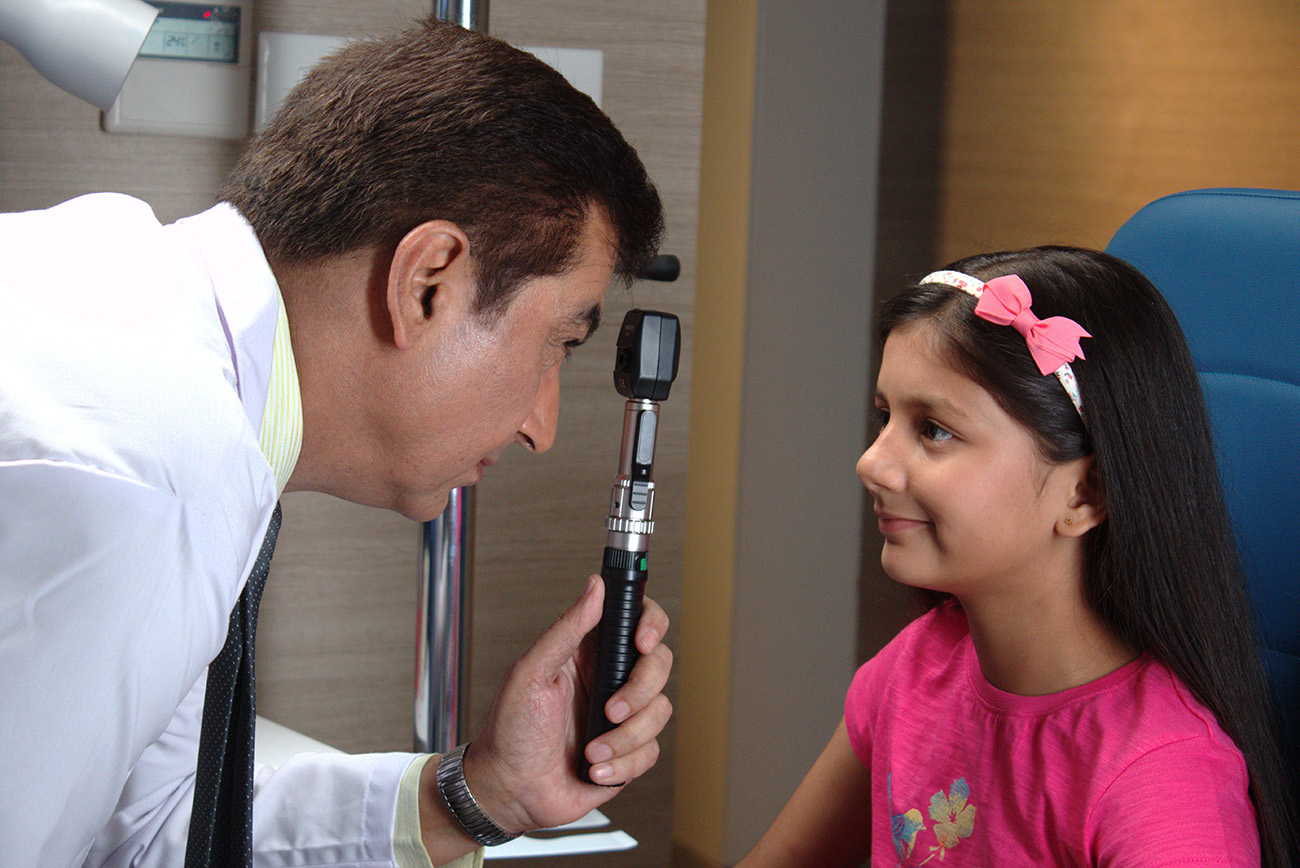
Even if your child can see well, it is recommended to have annual eye check-ups. Children’s eyes grow rapidly, and early detection allows timely intervention.
At KK Eye Institute, a comprehensive eye examination includes:
- Visual acuity testing
- Refraction
- Eye alignment assessment
- Screening for lazy eye (amblyopia)
- Retina and optic nerve evaluation
Early diagnosis helps prevent long‑term complications and ensures healthy visual development.
What are Some Healthy Visual Habits Every Child Should Follow?
Here are 6 simple habits that your child can follow to significantly reduce eye strain and support healthy vision:
- Follow the 20‑20‑20 rule– every 20 minutes, look 20 feet away for 20 seconds
- Ensure proper lighting during reading or homework
- Maintain correct posture and reading distance (at least 30–40 cm)
- Encourage 2 hours of outdoor play every day
- Avoid screens during meals and before bedtime
- Use anti‑glare screens or filters whenever possible
These habits help relax the eye muscles and reduce the risk of myopia progression.
Balanced Screen Usage: A Parent’s Guide
In today’s world, screens are unavoidable. However, that does not mean your child needs to be glued to them. Here’s a balanced screen usage guide for parents to help manage their child’s screen time wisely:
- Limit recreational screen time to under 1 hour/day for young children
- Encourage breaks during online classes
- Keep screens at eye level, not too close
- Avoid giving gadgets like mobile phones or tablets as pacifiers
- Promote non‑screen hobbies, such as reading, drawing, puzzles, and sports
Healthy screen habits today can help protect your child’s vision tomorrow.
Modern Treatments That Help Slow Myopia Progression
The goal is not just to correct your child’s vision but to slow down the eye’s abnormal growth.
- Special Myopia‑Control Glasses
These lenses reduce peripheral blur, improve vision clarity and help slow progression.They have been shown to reduce myopia progression by nearly 71%. - Low‑Dose Atropine Eye Drops
These drops are clinically proven to slow myopia progression in children over 5 years. - Contact Lenses to Correct Myopia in Children
With advances in ophthalmology, you can now opt for FDA-approved contact lenses for controlling the progression of myopia in children. They are prescribed for children 8 years and older. These lenses must be worn during the day and removed at night.
Conversely, Ortho K lenses are rigid lenses worn overnight to temporarily flatten the cornea while sleeping, giving clear vision during the day without glasses.
Your child’s eye specialist at KK Eye Institute will recommend the best treatment for slowing myopia progression based on age, prescription, and lifestyle.
Why Does Early Intervention Matter?
Myopia can affect your child’s ability to learn, participate in the classroom and perform routine activities with confidence. When myopia goes unnoticed or uncorrected, your child may struggle to see the board, concentrate on lessons, or engage fully in sports and social activities.
This is why early intervention is critical.
Early diagnosis and appropriate myopia management can help children see clearly, learn effectively, and reach their full potential.
Myopia tends to worsen every year if left unmanaged. High myopia increases the risk of:
- Retinal detachment
- Glaucoma
- Early cataracts
- Macular degeneration
Don’t let poor vision hold your child back. Schedule a comprehensive eye examination today and give them the clear sight they need to succeed both inside and outside the classroom.
Key Takeaway
Myopia is common, widely prevalent, but manageable. With regular eye exams, healthy habits, and timely treatment, you can help your child enjoy clear, comfortable vision for years to come.
Don’t let myopia hold your child back. Schedule an eye exam today with our expert ophthalmologists at K K Eye Institute.