Did you know that seeing clearly, and seeing efficiently, are two very different things? Puzzled? Let us explain!
There are some children who have 20/20 vision and structurally normal eyes, but they struggle to understand what they see. The child might complain about double vision, headaches, or words moving on the page. This is happening because, quite literally, their eyes are not working together.
And the problem can amplify into a larger issue. When visual systems struggle, learning becomes physically exhausting. Children may respond by avoiding reading, acting restless, becoming irritable, or losing confidence—not because they are unwilling, but because their visual system is overloaded.
This is where Vision Therapy can offer immense benefits to children.
WHAT IS VISION THERAPY?
Put very simply, we can define vision therapy as physiotherapy for the visual system.
Vision Therapy is a structured, non-surgical, drug-free treatment program with a goal of retraining your eyes and brain to work better together.
While glasses correct clarity, Vision Therapy is a series of exercises that improve how well your eyes work together and process visual information, covering areas like;
- Eye teaming (how both eyes coordinate)
- Eye focusing and flexibility (near–far adjustment)
- Eye tracking (reading smoothly across text)
- Visual processing speed
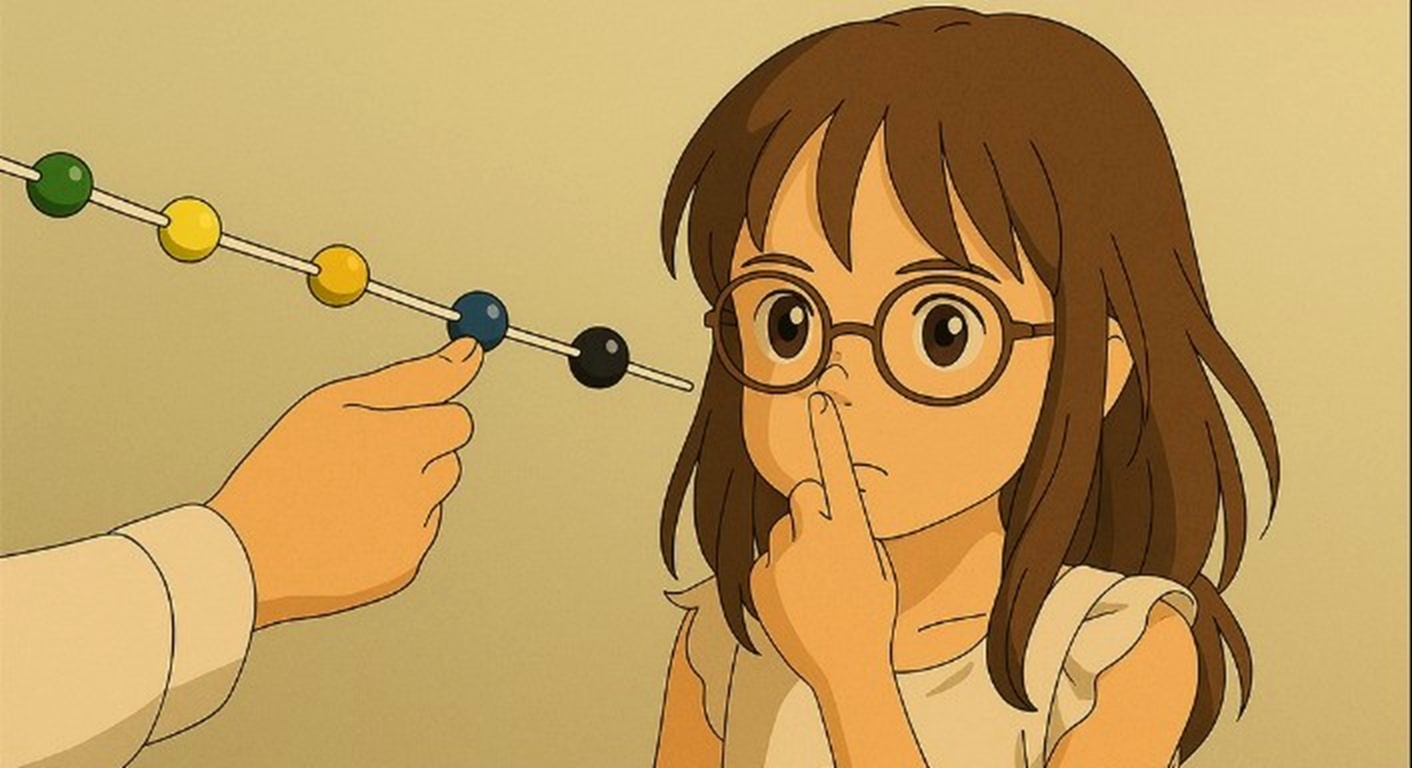
- Eye–hand coordination
- Depth perception
These are neurological skills learned during development, but they can be improved with the right intervention, especially in children.
For best results, kids typically do these exercises both in an office with a specialist and at home.
WHEN IS VISION THERAPY RECOMMENDED?
Vision Therapy works most effectively in children, especially in early childhood, when the visual system is still developing. Visual system issues at this stage can impact learning ability severely.
It is of special use in cases where children suffer from Convergence Insufficiency, where eyes don’t turn inwards together to focus. Such issues do not show up in regular eye tests. They require eye examination by a trained specialist.
In one study of 32 schoolchildren with convergence insufficiency, 28 showed improvement after 8 weeks of treatment. That’s an 87.5% success rate! (Citation)
It is also helpful in ‘lazy eye’ where one eye has stronger vision than the other. The brain starts favoring the stronger eye and ignoring signals from the weaker one. Over time, the weaker eye’s vision gets worse because the brain isn’t using it properly. It’s not that the eye itself is defective – it’s that the brain-eye connection didn’t develop right.
And similar problems can happen if anything is wrong with the eye, like childhood cataract or crossed vision, or severe myopia in one eye.
Remember – Vision Therapy is NOT a solution for dyslexia or learning disabilities.
OUR APPROACH TO VISION THERAPY
- Comprehensive binocular vision assessment to identify the root cause of visual difficulties
- Individualised therapy design, because no two children are treated the same
- Guided, progressive therapy using specialised tools such as therapeutic lenses, prisms, digital targets, balance boards, and structured exercises
- Measured outcomes where progress is tracked, reviewed, and refined
- Parent partnership, ensuring families are informed, involved, and supported throughout the process
Therapy may be delivered in-clinic, at home, or through a blended model, depending on the child’s needs.
EARLY VISION CARE CAN CHANGE A CHILD’S FUTURE
Childhood is a period of extraordinary neurological plasticity. Early intervention can mean faster adaptation, more lasting improvements, reduced frustration, better academic confidence, and stronger emotional well-being.
Children often show improvements in reading fluency, attention and classroom engagement, confidence, willingness to learn, and coordination in sports and daily activities.
In real terms, this can influence academic performance, self-esteem, and long-term learning outcomes.
At K K Eye Institute, we are committed to advancing paediatric eye care with clinical excellence, compassion, and #NoCompromises.